

The best technology purchase is not always the newest device on the shelf. Sometimes it is the pair of headphones that makes a daily commute more comfortable, the laptop that remains reliable for years, or the charger that quietly eliminates a recurring inconvenience. The real measure of technology is how well it serves the life you already live.
Yet buying everyday technology has become surprisingly complicated. Specifications multiply, promotional prices create urgency, and features that look impressive in a demonstration may have little relevance to your routine. A smarter buying guide begins by reversing that process: understand your needs first, then let the evidence determine which product deserves your money.
1. Define the problem before choosing the product
Write down the specific limitation of your current setup. Is your phone running out of battery before the end of the day? Are your headphones uncomfortable after an hour? Does your computer struggle with the applications you actually use? A clear problem makes it easier to distinguish a meaningful upgrade from an attractive distraction.
Divide your requirements into essentials, preferences and extras. For a laptop, essentials might include compatibility with work software, adequate memory and a comfortable keyboard. Preferences might include a lighter chassis or a brighter display. Extras might include a premium finish. This distinction helps you avoid paying for features that will rarely affect your experience.
2. Compare specifications in context
Technical specifications are useful only when interpreted in relation to a task. A larger battery does not automatically mean longer runtime because screen brightness, processing demands and software efficiency affect consumption. A camera with more megapixels does not necessarily produce better photographs in difficult lighting. Headphone frequency response alone cannot tell you whether a particular fit will be comfortable.
Look for measurements that reflect your intended use. If you travel frequently, consider actual battery runtime, charging options and weight. If you make calls in noisy environments, microphone performance may matter more than musical detail. If you edit photographs, display accuracy and software compatibility may matter more than a fashionable design. Independent tests should describe their methods and conditions so you can judge whether the results apply to you.
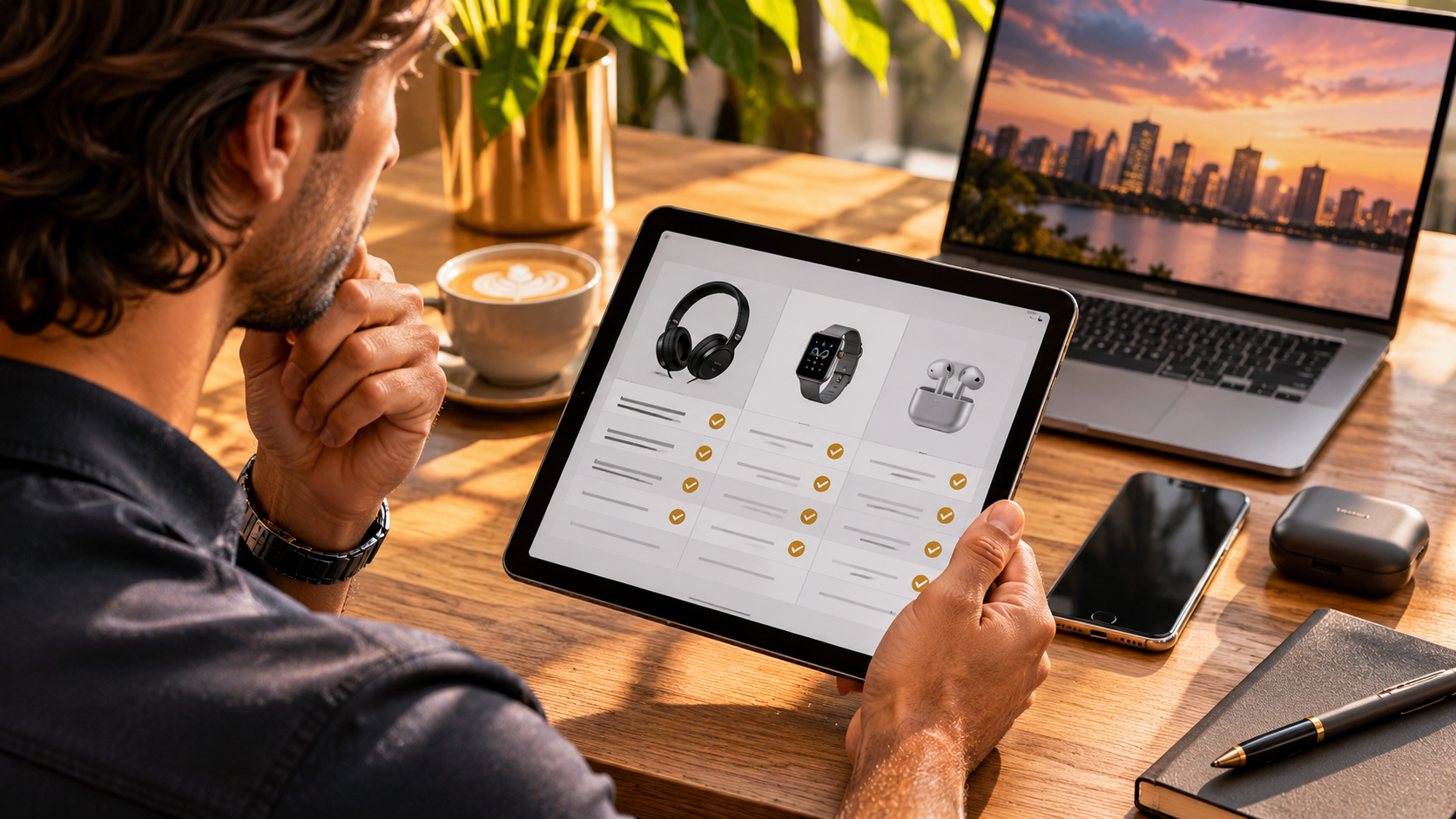
3. Calculate the total cost of ownership
The purchase price is only the beginning. Accessories, software subscriptions, replacement parts, repairs and eventual disposal can affect the cost of owning a device. A less expensive product that requires proprietary accessories or frequent replacement may be more costly over time than a durable alternative.
Consider two hypothetical headphones. One costs $120 and requires replacement after two years. Another costs $200 and lasts four years. Assuming no other expenses and those illustrative lifetimes, their annual ownership costs are $60 and $50 respectively. If the second model also requires $40 in replacement cushions over its lifetime, both cost $60 per year. The example does not predict actual durability; it shows why price alone is an incomplete comparison.
Include any financing interest and recurring charges in your calculation. Check whether advertised features require a paid membership. When considering a smart home device, find out whether basic functions remain available without a subscription or internet connection. A purchase that looks affordable today should remain affordable throughout its useful life.
4. Make compatibility and repairability priorities
A product that works well with your existing equipment can save more frustration than one with superior specifications on paper. Verify connector types, operating system requirements, supported wireless standards and compatibility with accessories you already own. Do not assume that identical-looking ports support the same charging speeds or data capabilities.
Investigate battery replacement, spare parts, repair options and software support. Ask how long the manufacturer expects to provide security updates and whether the answer applies to the exact model you are considering. The iFixit repairability resources offer a starting point for understanding how some devices are designed to be serviced. Availability of parts and repair services varies by model and location.
5. Evaluate privacy and security before connecting
Connected devices can introduce conveniences as well as new responsibilities. Before purchasing a smart speaker, camera or wearable, understand what information it collects, where that information is stored and which settings let you control sharing. Check whether important functions require an account and whether you can delete your data when you stop using the product.
Look for security update policies, account protection options and clear instructions for resetting the device before resale. The CISA Secure Our World initiative provides general guidance on protecting accounts and keeping software updated. These habits matter just as much as the features printed on a product's packaging.
6. Separate independent evidence from marketing
Manufacturer specifications are a useful source for supported features, dimensions and official compatibility. Independent reviews can provide additional context about real-world performance, comfort and limitations. Look for reviewers who explain how they tested a product, disclose commercial relationships and distinguish observed results from manufacturer claims.
A high rating is not a substitute for relevant evidence. Read critical reviews as well as positive ones, and look for repeated issues rather than isolated complaints. The FTC's guidance on endorsements and reviews is useful context for understanding the importance of transparent recommendations. Treat affiliate links and sponsored coverage as commercial relationships that require disclosure, not automatic evidence of poor quality.
7. Check the seller, warranty and return policy
Before placing an order, confirm the seller's identity, whether the product is new or refurbished, what warranty applies and how returns are handled. Marketplace listings may involve third-party sellers whose policies differ from those of the platform. Check return shipping, restocking charges and whether opening the packaging affects eligibility.
A reputable refurbished product can be a sensible option when its condition, battery health and warranty are clearly described. Conversely, an unusually low price from an unfamiliar seller may not justify the risk. The FTC consumer advice website offers resources for evaluating purchases and avoiding common shopping problems.
The closer look
Buy technology when it solves a meaningful problem, not simply because a new model exists. Compare the full ownership cost, verify the evidence and choose a product that fits your existing routine. If your current device still serves you well, keeping it may be the smartest purchase decision of all.
Explore our Products collection and Technology & Gadgets coverage, or join The Weekly Zoom for future discoveries. This guide is general editorial advice, not a hands-on product review. Both images are AI-generated illustrations and do not represent verified products or test results. Read our Editorial Standards.